
How to get from Cebu Airport to Oslob
By ArriveCebu · Updated · Fares and times checked October 2026
Quick answer
Oslob is about 130 km from Mactan-Cebu International Airport, at the southern tip of Cebu. The cheapest way is a taxi or Grab to Cebu South Bus Terminal, then a Ceres bus marked "Bato via Oslob" for roughly ₱150–₱330 per person, which takes 5 to 6.5 hours door to door. A private van takes around 4 hours direct and costs from ₱6,600 for the whole group. Whale shark watching runs from 6am until noon, so most travelers arrive the day before.
- Distance
- About 130 km
- Private van
- ~4 hours
- Bus, door to door
- ~5–6.5 hours
- Whale sharks
- ~6am to noon
Your options at a glance
Private van
- Time
- ~4 hours, direct
- Cost
- From ₱6,600 per van (up to 9 guests with luggage)
- Best for
- Groups, families, late arrivals, day trips
Taxi + Ceres bus
- Time
- ~5–6.5 hours in total
- Cost
- ₱350–₱700 taxi or Grab to the terminal, then ₱150–₱330 per person
- Best for
- Solo travelers and backpackers with light bags
Taxi all the way
- Time
- ~4 hours, direct
- Cost
- Negotiated flat fare, agreed before you leave
- Best for
- Travelers happy to negotiate who land in daylight
Plan around the whale shark hours
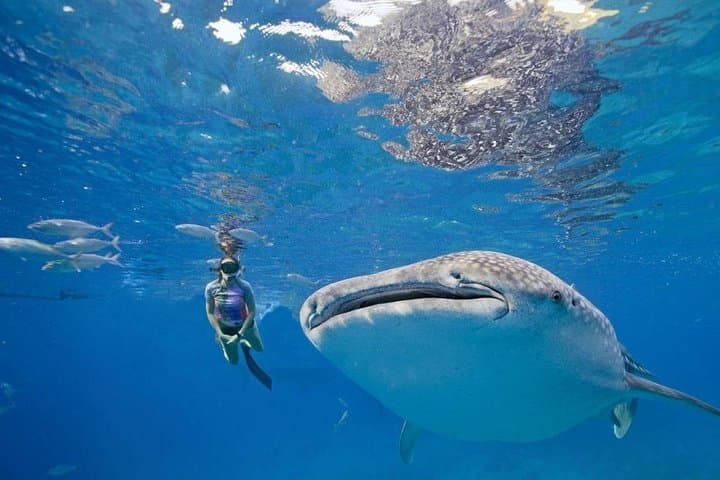
Most people go to Oslob for the whale shark watching in Barangay Tan-awan, which runs from 6am until noon, with registration closing around 11am. Even with a private van, it is around 4 hours from the airport, so you cannot land in the morning and reach the whale sharks the same day.
The usual plan is to travel down on arrival day, sleep in Oslob, and be at Tan-awan early the next morning, when it is also less crowded. If you are based in Cebu City or Mactan instead, a day trip is possible with a very early start, at around 3am to 4am.
Option 1: Bus via Cebu South Bus Terminal
There is no direct bus from the airport to Oslob. You cross to Cebu City first, then take a Ceres bus down the southeast coast. Buses run frequently from early morning into the evening, and the ride itself takes about 3.5 to 4.5 hours with stops.
- 1From arrivals, take a Grab or a metered taxi to Cebu South Bus Terminal on N. Bacalso Avenue, beside CityMall. Expect about ₱350–₱500 in a white taxi, ₱450–₱600 in a yellow airport taxi, or ₱500–₱700 by Grab. Allow 1 to 1.5 hours, as traffic across the bridges and through Cebu City is often heavy.
- 2Look for a Ceres bus with the signboard "Bato via Oslob". Do not take "Bato via Barili", which goes to Moalboal and the west coast.
- 3Pay the conductor on board. Published fares vary widely, from about ₱150 to ₱330 depending on the bus and whether it has air-conditioning, so have small notes ready.
- 4Tell the conductor where you are going. For the whale sharks, ask for Tan-awan, which comes before Oslob town. For hotels in town, get off at Oslob.
- 5Take a tricycle or habal-habal (motorbike taxi) for the last stretch to your hotel.
Option 2: Taxi the whole way
Some airport taxis will drive to Oslob for a flat fare, but it is a long trip and not every driver wants it. Agree the price, whether tolls are included, and the exact drop-off before you load your bags. Taxis are sedans, so they suit two people with normal luggage. Grab drivers do not always accept a trip this long.
Option 3: Private van transfer
A private van takes you from arrivals straight to your Oslob hotel or the Tan-awan area in around 4 hours. With ArriveCebu, a van starts from ₱6,600 one-way for the whole group, or ₱8,400 for a same-day return or day use. You pay the driver in cash on arrival.
It costs more than the bus. It is worth it when there are several of you to share the cost, when you land in the afternoon or evening, or when you want an early-morning whale shark visit and a return to the city on the same day without changing vehicles.
- 1Send your flight number, arrival date, group size and Oslob hotel on WhatsApp.
- 2Get a fixed price back, usually within 15 minutes during the day.
- 3Your driver tracks your flight and meets you at arrivals, even if you land late.
- 4Ride directly to Oslob, with no terminal or tricycle changes.
Tips for the trip
The southeast coast road passes Carcar, Argao and Dalaguete. If you want to break up the trip, Dalaguete is a good overnight stop and gives you access to Osmeña Peak.
Tumalog Falls is a short ride from the whale shark area and makes an easy add-on on the same morning.
Bring some cash in small notes. Bus conductors, tricycles and the whale shark site all prefer cash.
Frequently asked questions
Can I see the whale sharks on the same day I land in Cebu?
Usually not. Whale shark watching runs from 6am until noon, with registration closing around 11am, and Oslob is around 4 hours from the airport. Most travelers stay in Oslob on arrival night and go the next morning.
Which bus goes to Oslob from Cebu?
Ceres buses from Cebu South Bus Terminal marked "Bato via Oslob". Buses marked "Bato via Barili" go to the west coast instead.
How long does it take to get from Cebu Airport to Oslob?
Around 4 hours by private van or taxi. By bus, including the taxi to the terminal and waiting time, most people take 5 to 6.5 hours.
How much does it cost to get from Cebu Airport to Oslob?
By bus, roughly ₱550–₱1,100 for one person, including the taxi to the terminal. A taxi the whole way is a negotiated flat fare. A private van starts from ₱6,600 for the whole group.
Can I do Oslob as a day trip from Cebu City?
Yes, with a very early start, leaving around 3am to 4am. A private van for a same-day return starts from ₱8,400, which saves the bus connections in the dark.
Where do I get off the bus for the whale sharks?
Ask the conductor for Tan-awan, the barangay where whale shark watching takes place. It comes before Oslob town.
Is it better to stay in Oslob or go back to Cebu City the same day?
Staying a night in Oslob means a relaxed early visit to the whale sharks and less time on the road in one day. A same-day return works if you are short on time and do not mind a long day.
Sources
Bus, taxi and fare details change. We checked them in October 2026 against these sources and our own drivers' experience on the route.